What do you need to know?
“Was AI involved?” and “Does this student understand the essay?” are different questions. Your course policy may make both relevant. Choose an assessment that addresses the question you need answered.
AI detectors analyze patterns in text. They do not ask a student to explain a claim or connect two ideas. Turnitin's own guidance cautions against using its AI result as the sole basis for an adverse action against a student.
Ask the student to explain a choice.
Start with a sentence from the paper: “Why did you use this example?” or “What would change your conclusion?” Follow the answer rather than testing an unrelated fact.
A conversation can reveal reasoning that a multiple-choice answer cannot. It takes instructor time and needs consistent, accessible response options. Tell students what they will be asked to demonstrate.
Review how the draft developed.
Outlines, source notes, drafts, and revision reflections can show the choices a student made. Ask them to identify a claim they changed and explain why.
Set these expectations before the assignment, including what AI assistance is permitted and how it should be disclosed. Process evidence and understanding of the finished work can both be useful.
Ask about the submitted essay.
A comprehension check can ask about a word the student used, a detail they included, or a connection they made. A general quiz on the topic may test knowledge the essay never used.
WhatYouWrote generates short multiple-choice quizzes from each student's writing. Instructors choose the question mix and timing, and can add their own questions.
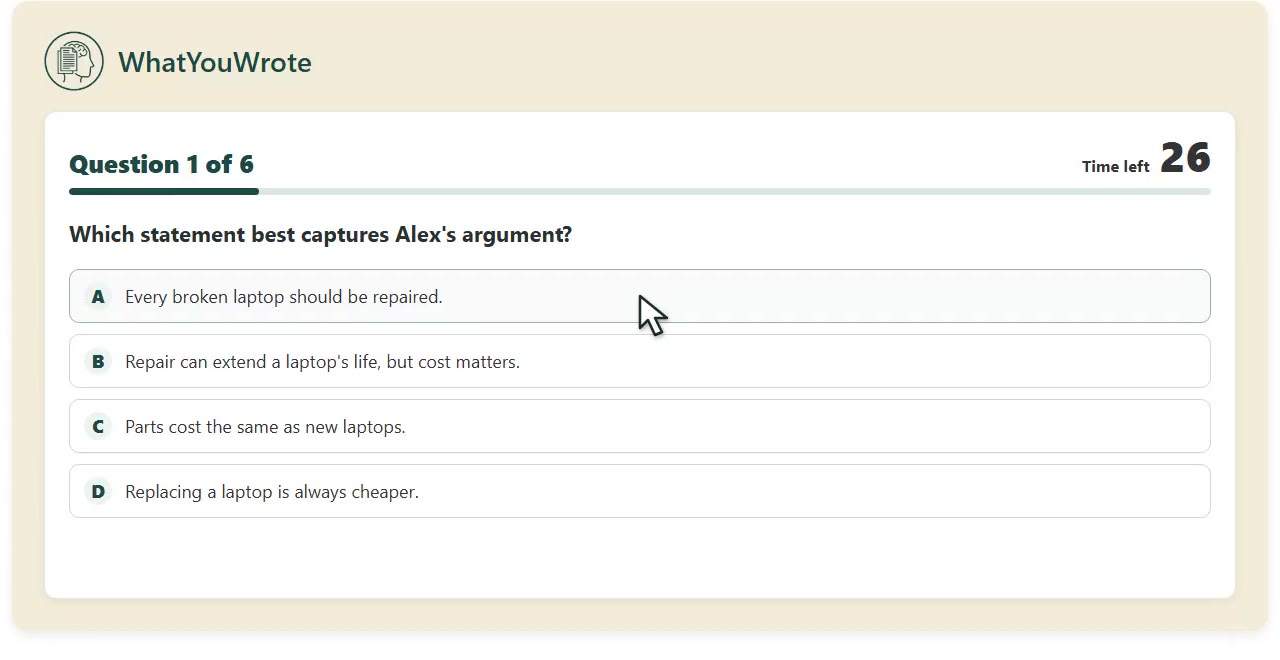
Read the passage and try the questions →
Multiple-choice questions check recognition. They do not show everything a student can explain, and a correct answer may involve guessing. Use them alongside the essay and follow up where needed.
Plan the check before students begin.
Explain the purpose, permitted tools, timing, and how results will be used. Choose questions that fit what you taught, and account for language needs, disability accommodations, and test anxiety.
Start with one assignment so you can review the question quality and workflow before expanding.
Look for a specific gap.
A student who recognizes vocabulary and facts but misses the main argument may need a different conversation from one who struggles with all three.
A low score calls for a closer look at understanding; it is not a finding of misconduct. A high score does not prove independent authorship. Your judgment and institution's policy remain part of the assessment.